

In a Nutshell
Painting realistic hair can feel intimidating when every strand seems to demand attention. This Skillshare class takes a more approachable route: simplify the hair into larger shapes, establish form through values, then gradually introduce texture and detail. Tanja Jensen demonstrates the process through a watercolor braid project, making the subject feel much more manageable for artists who want convincing hair without obsessing over every individual strand.
Who is this Course For?
- Watercolor beginners — A practical introduction to approaching hair without needing advanced portrait-painting skills.
- Portrait artists — Useful for improving the way hair is structured, shaded, and integrated into portraits.
- Artists struggling with hair — Helps replace the “paint every strand” approach with simpler shapes and value changes.
- Intermediate watercolor painters — Offers additional techniques for creating texture, highlights, and dimensionality.
- Artists wanting a focused exercise — The braid project provides a contained subject for practicing realistic hair.
What you will Learn
- Break complex hair into simple, manageable shapes.
- Sketch a braided hairstyle from reference.
- Establish form using light and shadow.
- Build realistic hair texture without painting every strand.
- Use wet-on-wet and wet-on-dry techniques.
- Create highlights through lifting.
- Develop color variation and depth through layering.
- Mix colors while prioritizing accurate values.
- Add loose strands and flyaways for realism.
- Complete a watercolor braid from sketch to final details.
About the Course
The biggest strength of this class is its approach to simplification. Rather than treating hair as thousands of individual strands, Tanja Jensen teaches students to see it as a collection of larger shapes that can gradually be divided into smaller sections. This makes an intimidating subject considerably easier to understand.
The class begins with supplies and a sketching exercise before moving into the braid project. Students first learn to identify the major shapes within the hairstyle, then explore how light and shadow create the illusion of form. This progression is particularly useful because it establishes the structure of the hair before introducing texture.
The texture lesson is especially practical. Instead of mechanically drawing individual hairs, Jensen demonstrates how overlapping sections, changes in value, brushstrokes, and lifted highlights can suggest texture. She also explains why irregular, varied highlights tend to look more natural than perfectly aligned strokes.
The main project then puts those ideas into practice. The braid is developed progressively through base layers, darker values, details, highlights, and additional texture. Students see both wet-on-wet and wet-on-dry approaches and learn when each can be useful: wet-on-wet for softer, painterly effects and wet-on-dry for greater control and sharper details.
Another valuable aspect is the emphasis on values over exact color matching. Jensen repeatedly encourages students to concentrate on identifying light, middle, and dark areas rather than becoming overly concerned with reproducing a particular pigment mixture. That principle is highly transferable to other watercolor subjects and portrait work.
The class also includes a quick color-theory and color-mixing exercise toward the end, reinforcing the idea that convincing hair depends not only on texture but also on believable color relationships.
There is a particularly encouraging quality to the teaching: perfection isn’t presented as the goal. Jensen demonstrates how lifting can correct or soften areas and repeatedly frames mistakes as part of the learning process. For students who tend to become overly cautious with watercolor, that mindset can make the class feel much less intimidating.
Overall, this is a focused class rather than a comprehensive watercolor portrait course. Its strength lies specifically in helping artists understand how to see and construct hair—from large shapes and form to texture and finishing details.
The Instructor
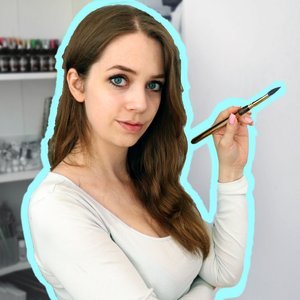
Tanja Jensen – Professional artist from Denmark specializing in sculpture, drawing, and painting. She works across multiple mediums including watercolor, gouache, acrylic, graphite, and airbrush. Her teaching style focuses on approachable techniques for building realism, especially in portrait and food-themed artwork.
Conclusion
Watercolor Portrait: Painting Realistic Hair – Shape, Form & Texture is a focused and approachable class for anyone who wants to become more confident painting realistic watercolor hair. Its strongest lesson is learning to simplify: understand the large shapes first, establish convincing values, and only then introduce texture and detail.
I would recommend it especially to beginners and intermediate watercolor artists, as well as portrait painters who struggle with hair. More advanced artists may find the fundamentals familiar, but the exercises and alternative techniques can still provide useful practice. The class is particularly effective for artists who want realistic-looking hair without getting trapped in the exhausting process of painting every single strand.
The Art of Realistic Hair: Shape, Form & Texture in Watercolor


