In a Nutshell
Painting transparent glass can seem intimidating, but the secret is learning to see it as a collection of shapes, values, reflections, and highlights. From Shape to Shine: Glass in Watercolor – Simplify & Paint Transparency takes this approach step by step, showing how complex glass objects can be simplified into manageable elements and transformed into convincing watercolor paintings.
Rather than relying on complicated theory, the class focuses on observing references, establishing accurate shapes, choosing colors, preserving highlights, and gradually building realistic transparency.
Who is this Course For?
- Watercolor beginners — A clear, step-by-step approach makes the subject approachable even if glass feels difficult.
- Intermediate watercolor artists — Useful for improving realism, value control, reflections, and transparent effects.
- Artists interested in still life — Provides practical guidance for rendering glassware and bottles from photographic references.
- Artists struggling with transparency — Shows how to simplify reflections and shadows instead of trying to paint every detail.
- Artists wanting stronger drawing skills — The lessons emphasize proportion, symmetry, perspective, and constructing accurate shapes.
What you will Learn
- Simplify complex glass objects into basic shapes.
- Build accurate sketches using perspective and symmetry.
- Identify highlights, shadows, reflections, and midtones.
- Choose watercolor colors for transparent subjects.
- Preserve bright highlights effectively.
- Paint realistic glass and liquid.
- Use masking fluid for fine highlights and details.
- Develop glass bottles from sketch to finished painting.
- Break references into manageable sections.
About the Course
Glass is one of those subjects that can make watercolor artists hesitate. Its transparency means there often isn’t a simple area that can be painted as a single color. Instead, the artist has to interpret reflections, highlights, shadows, surrounding objects, and subtle changes in value. This class tackles that challenge by making the subject much more manageable.
Tanja Jensen begins with the fundamentals of understanding glass. Before moving into finished paintings, students examine shape, perspective, symmetry, light, and value. A short study exercise helps demonstrate how these elements work together, giving students a practical foundation before tackling more complicated compositions.
One of the strongest ideas throughout the class is simplification. Rather than becoming overwhelmed by every reflection visible in a reference photograph, students learn to identify larger shapes first and progressively break them into smaller sections. This makes the process feel considerably less intimidating while also encouraging more careful observation.
The first major project focuses on a glass of wine. Students work through the reference, establish the sketch, select colors, preserve highlights, paint the glass, and then introduce the wine. Adding liquid creates another layer of reflections and distortion, making this an especially useful exercise for understanding how transparent objects interact with what is inside them.
The second project moves to a classic glass bottle. Here, the emphasis shifts toward constructing the bottle accurately, refining its details, selecting an appropriate palette, and using masking techniques. The bottle project also introduces a straw and soda, giving students additional opportunities to practice reflections, transparency, and subtle value changes.
The class contains 20 lessons, ranging from short introductory and preparation videos to longer painting demonstrations. The lessons cover supplies, observation, sketching, color selection, masking, painting the glass, painting wine, and completing the bottle project.
The materials are also relatively straightforward. Jensen demonstrates the process using watercolor paints, watercolor paper, brushes, masking fluid, masking tape, pencils, erasers, a palette, and basic materials for lifting and controlling paint. She uses Fabriano Artistico Extra White hot-pressed watercolor paper for the final paintings, while noting that students can use the watercolor paper they already have.
Another particularly useful aspect is that students aren’t required to produce a perfect drawing before beginning. Jensen encourages practicing the underlying shapes and fundamentals, explaining how sketching can improve accuracy and confidence with watercolor. Students can use her provided sketch or create their own, while the class project encourages sharing the sketches and finished paintings.
Overall, the course works best as a practical study of how to see glass, rather than simply a demonstration of how to copy a particular painting. The emphasis on shape, values, symmetry, reflections, and simplification gives students principles they can apply to other transparent objects and still-life subjects.
The Instructor
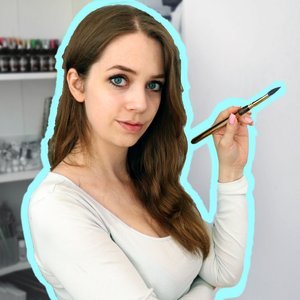
Tanja Jensen – Professional artist from Denmark specializing in sculpture, drawing, and painting. She works across multiple mediums including watercolor, gouache, acrylic, graphite, and airbrush. Her teaching style focuses on approachable techniques for building realism, especially in portrait and food-themed artwork.
Conclusion
From Shape to Shine: Glass in Watercolor – Simplify & Paint Transparency is a focused and practical class for anyone wanting to become more comfortable painting transparent objects. Its biggest strength is the way it breaks a potentially complicated subject into understandable components: shape, perspective, values, reflections, highlights, and color.
I would recommend it particularly to beginners and intermediate watercolor artists who want to practice realistic still life and learn how to approach glass without becoming overwhelmed by its reflections. More experienced artists may also find value in the exercises and the instructor’s systematic approach to simplifying references.
Glass in Watercolor: Paint Transparency with Confidence